Sigma 4+
Product information, applications, features, benefits, and brochure.
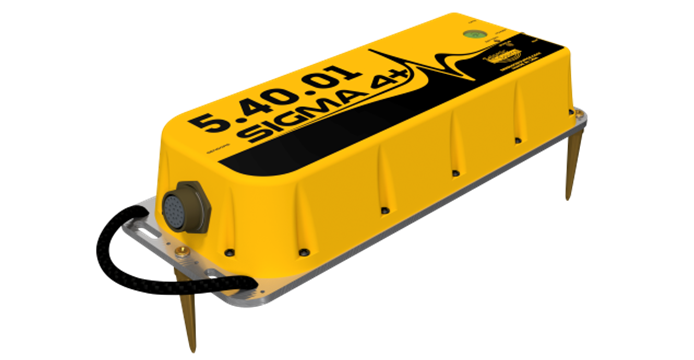
Sigma 4+
Overview
The Sigma 4+ is a robust and versatile nodal seismograph designed for autonomous recording, monitoring, and active-source seismic acquisition. It builds on the Sigma 4 platform with a streamlined case design, reduced weight, optional internal co-processing, and flexible sensor and communication options.
Sigma 4+ supports continuous recording as standard, making it useful for monitoring and autonomous seismic operation. Internal or external GPS provides clock discipline and location information, while cable, Wi-Fi, cellular Ethernet, and optional mesh radio support provide flexible field communication and data offload options.
The system can acquire active data from vibroseis, dynamite, and impulsive sources, while also supporting passive applications such as hydraulic fracturing monitoring, surface wave acquisition, long-term permanent monitoring, and earthquake monitoring.
Features
- New streamlined case design
- Less weight than the original Sigma 4
- Same excellent performance as Sigma 4
- Optional internal co-processing RABbit board
- Rugged field-ready nodal seismograph platform
- Continuous recording standard for monitoring and autonomous operation
- Internal or external GPS for clock discipline and location information
- Trigger connector for hammer switch or voltage level change
- Maximum trace length supports continuous recording
- Rugged IP67 case
- Optional mesh radio network for deployment, command, and control of nodes
- Cable, Wi-Fi, or cellular Ethernet for field data offload while recording
- Rugged 10-pin MS-style 100Base-Tx Ethernet connection
- Ruggedized 19-pin external USB connection
- Hot-swap external storage option for collecting data while recording
- Optional internal 99 watt-hour battery
- Provides about 48 hours of operation with optional internal battery
- Optional internal 2 Hz geophone sensor
- Sensor by-pass connector for ADC calibration or internal sensor calibration
- Supports connection of external sensors
- Event Monitor for local monitoring
- Tremor Cloud for remote monitoring
- Optional active acquisition package
- Includes necessary utilities for field operation
- 3 input channels
- Sigma 3 converter circuit
- Low x1 and high x16 preamp gains
- Sample rates from 125 to 4000 samples per second
- Input impedance: 20 kOhm
- 4 input channels
- DAQ4 converter circuit
- Low x1, mid x4, and high x16 preamp gains
- Sample rates from 125 to 64,000 samples per second
- Input impedance: 100 kOhm
- Internal memory: 8 GB
- Power requirement: 0.4 watts per channel
- Voltage requirement: 9 to 28 volts
- Sigma 4-3+ size: 393 x 140 x 57 mm / 15.5 x 5.5 x 2.25 inches
- Sigma 4-4+ size: 353 x 140 x 66 mm / 13.9 x 5.5 x 2.6 inches
- Operating temperature: -40°C to 80°C
Benefits
- The Sigma 4+ streamlined design reduces weight while maintaining the performance of the Sigma 4 recording system.
- Use the same system for active acquisition, event monitoring, remote monitoring, and long-term continuous recording.
- Tremor Cloud, cellular Ethernet, and continuous recording options make Sigma 4+ useful for remote monitoring programs.
- Hot-swap storage and optional internal battery support help crews collect data while recording and extend field operation time.
- Optional internal sensors, external sensor connections, and the sensor by-pass connector support multiple survey configurations.
- The rugged IP67 case and wide operating temperature range support reliable deployment in demanding field conditions.
Brochure
Sigma 4+ BrochureRelated Applications
Learn more about applications commonly used with this product.
- Use continuous recording, GPS timing, and rugged nodal deployment for autonomous seismic projects.
- Acquire active-source data with vibroseis, dynamite, and impulsive source systems.
- Use Sigma 4+ for passive monitoring during hydraulic fracturing operations.
- Support local or remote seismic event monitoring and long-term continuous recording.
- Use Sigma 4+ for surface wave acquisition and passive seismic studies.
- Use cellular Ethernet and Tremor Cloud for remote monitoring and data access.